Mastodon link

About Us

My wife and I live in the Portland, Oregon area. We enjoy living in a beautiful region, surrounded by trees, parks, and at the same time close to a thriving urban center. Once the pandemic passes, we hope to open our home again to transgender persons seeking a place to stay while in the area for surgery and postoperative care.
Showing posts with label gender. Show all posts

Monday, June 15, 2020

Commentary on the Alliance Defending Freedom response to the Supreme Court LGBTQ Employment Ruling

As many of us would expect, the Alliance Defending Freedom, an anti-LGBTQ rights organization and hate group, had a few things to say after finding itself on the losing side of the Supreme Court ruling on LGBTQ employment rights.


The Southern Poverty Law Center describes the ADF:

Founded by some 30 leaders of the Christian Right, the Alliance Defending Freedom is a legal advocacy and training group that has supported the recriminalization of sexual acts between consenting LGBTQ adults in the U.S. and criminalization abroad; has defended state-sanctioned sterilization of trans people abroad; has contended that LGBTQ people are more likely to engage in pedophilia; and claims that a “homosexual agenda” will destroy Christianity and society. ADF also works to develop “religious liberty” legislation and case law that will allow the denial of goods and services to LGBTQ people on the basis of religion. Since the election of President Trump, ADF has become one of the most influential groups informing the administration’s attack on LGBTQ rights.


https://www.splcenter.org/fighting-hate/extremist-files/group/alliance-defending-freedom


After Aimee Stephens came out to her employers, the Harris Funeral Homes, and indicated her intention to transition, she was fired, explicitly because she was a transgender person and therefore failed to meet the dress code for male employees her employer demanded she follow.  The Equal Employment Opportunity Commission backed her, and the case was litigated with decisions in Aimee’s favor.  On the opposite side of the case was the Alliance Defending Freedom, representing her employer and funded through it’s very conservative Christian backers.


After losing at the U.S. Court of Appeals for the Sixth Circuit, which ruled that not only was this discrimination, but the Religious Freedom Restoration Act did not allow an exemption in the case, the Alliance Defending Freedom decided to take the case to the Supreme Court.


That court decision has now been published:

“An employer who fires an individual for being homosexual or transgender fires that person for traits or actions it would not have questioned in members of a different sex. Sex plays a necessary and undisguisable role in the decision, exactly what Title VII forbids."

- US Supreme Court, Harris Funeral Homes vs EEOC Majority Opinion, 2020


https://www.supremecourt.gov/opinions/19pdf/17-1618_hfci.pdf


There it is.  Sex plays a necessary and undisguisable role in the decision, exactly what Title VII forbids. There isn’t any wiggle room in this very clear ruling.


Naturally, this upset the Alliance Defending Freedom, and they voiced their outrage and disappointment on their website today.


https://www.adflegal.org/blog/supreme-court-delivers-troubling-decision-against-harris-funeral-homes

“Redefining “sex” to mean “gender identity” creates chaos, with widespread consequences for everyone.

  • It undermines dignity, privacy, and equal opportunities for women.
  • It could compel professionals from all walks of life to refer to colleagues with pronouns and other sex-specific terms according to gender identity rather than biology.
  • It puts employers like Tom in difficult positions—requiring them to treat men who believe themselves to be women as if they are in fact women, even if that results in violating the bodily privacy rights of other employees.

The bottom line is that ignoring biological reality in our laws threatens our freedoms of conscience, religion, and speech.”


OK, they said their piece.  Let’s dismantle these intellectual droppings.


ADF writes: “Redefining “sex” to mean “gender identity” creates chaos, with widespread consequences for everyone.”


The Supreme Court decision did not do this.  Instead, they simply applied a test.  If Aimee had been assigned a female sex at birth, would she have been fired?  No, she was only fired because she had been assigned a male sex at birth.  She was fired for failing to adhere to the dress code of her assigned at birth sex, while she identified as a woman and adhered to the woman’s dress code of her employer.


Her employer fired her.  Sex played a necessary and undisguisable role in the decision, exactly what Title VII forbids.


ADF writes: “It undermines dignity, privacy, and equal opportunities for women.”


Rights are not a pie, in which a larger slice for one person means smaller slices for others.  Transgender persons, just as women are, are entitled to human rights, the fundamental rights that belong to every person.  Persons who are cisgender (that is, not transgender), or are transgender deserve to live, even flourish within their communities, with freedom to work, love, learn and play.  Both cisgender and transgender persons should be able to build their lives at home, at work, and in public spaces without fear for their safety and survival.  


Each human life, cisgender or transgender, is and should be the prerogative of the individual, deserving of the law’s equal protection.   It is very unlikely that people with a transgender identity simply choose their identity, unlike a freely chosen religious belief, yet the USA protects this choice of religion.  A property as intrinsic to the individual as their gender identity, whether cisgender or transgender, is something at the core of the individual.  The choices each individual makes about the expression of their gender, as a human being, whether cisgender or transgender, affect fundamental aspects of the individual’s identity at work, in school, and in the community, and are supported by our laws and policies, now at the federal level with this Supreme Court opinion.


ADF writes: “It could compel professionals from all walks of life to refer to colleagues with pronouns and other sex-specific terms according to gender identity rather than biology.”


Yes, it’s true.  Professionals really shouldn’t be assholes towards their colleagues.  That’s just... unprofessional.  Professionals don’t typically refer to colleagues with racial epithets, and professionals don’t typically refer to persons of another sex with sexualized or belittling language, either, if they wish to continue their employment.   Colleagues are supposed to be collegial, right?


Oh, and biology?  A person’s being transgender rather than cisgender is almost certainly due to biology, nature and not nurture.  It’s not mere chromosomes, but a complex dance of genetics, the uterine environment, chemistry, timing, and fetal brain development.  This biology appears to set the gender identity, and in some cases, about as common as natural redheads, this biology sets a gender identity deep in the brain that does not match the genitals that determine the assigned sex at birth.


ADF writes: “It puts employers like Tom in difficult positions—requiring them to treat men who believe themselves to be women as if they are in fact women, even if that results in violating the bodily privacy rights of other employees.”


These are not men who believe themselves to be women.  These are women whose bodies were assigned a male sex at birth, but whose gender identity deep in the brain is that of a woman.  These are men whose bodies were assigned a female sex at birth, but whose gender identity deep in the brain is that of a man.  These are non-binary people who decide to live true to their gender identity.


These are people who have made the decision to finally live as their authentic selves, deciding to stop hiding themselves within a false front matching the assigned sex at birth and constructed painfully for the purpose of protecting themselves and pleasing others.  Their gender identity is at the very core of their being.  The choices each individual makes about the expression of their gender, as a human being, whether cisgender or transgender, affect fundamental aspects of the individual’s identity at work, in school, and in the community, and are supported by our laws and policies, as affirmed by this decision of the Supreme Court of the land.


If an employer’s workplace is constructed so as be violating the bodily privacy rights of employees, whether of the same or a different anatomy or sex, that employer may want to reconsider how their workplace is set up.  I know that in the women’s room, no other woman can observe details of my anatomy, as we have doors on each stall.  Mens rooms also include urinals, but there can be dividers installed to afford the men a little more privacy.  There are very nice gender-neutral restroom designs available, should one be planning a significant remodel of the facilities.


ADF writes: “The bottom line is that ignoring biological reality in our laws threatens our freedoms of conscience, religion, and speech.”


The biological reality is that transgender people exist, and are human beings, entitled to the same basic human rights as cisgender persons.  If the existence of these people violates your freedoms of conscience, religion, and speech, I have to ask; what exactly do you expect society to do about this?  


Erasure of an entire population of human beings has been suggested by a few of your supporters, however, I suspect that would be considered a violation of the human rights of that population.


Perhaps, just perhaps, it is time to sit with your conscience, and look deep within yourself to see where these feelings come from.  A deeply held belief system is all well and good, until it conflicts with reality.  Remember that your freedoms end when they curtail the basic human rights of another, just as their rights end where they would curtail your own basic human rights.


Your religion, and your speech are your choices.  You are free to make choices that align with reality and civil behavior.  You are free to make different choices, as long as you do not curtail the basic human rights of others.


These are your choices.  Choose wisely.


Saturday, December 21, 2019

Navigating the Social Minefield

We are the summation of all our life experience, including that which results from the sex assigned at birth.

I personally reject the idea that the sex assigned at birth determines all of my identity, drawing a hard boundary around the gender role and presentation I am permitted, and forcing me to remain in one little box of gender identity.

I am aware of the potentialities of biology and biochemistry, and understand the path this body has taken from conception onward, resulting in a person who has transcended the boundaries that this culture draws around gender identity, presentation, and role.  My awareness demands that I reject the ideologies that declare assigned sex at birth to be all, or even the primary determinant as to which cultural boundaries I must remain within.

I recognize that there are those whose ideology demands that they deny the validity of my experience, and who demand that I remain within the bounds set by assigned sex at birth.

I also recognize that there are those who accept part of my path and my experience, but for whom my origin and experience are insufficiently pure, ideologically unacceptable in summation, to be worthy of their chosen labels.

These various interacting ideologies and prejudgements make social interactions a bit of a minefield. Living in a culture that insists on a gender binary, and only accepts a narrow set of paths through life can lead to someone like me being rejected or viewed as undesirable by some others.  While I personally do push hard for acceptance and recognition that people like me are human and valid, I don’t do this to deliberately others cause discomfort in others. I wouldn’t be comfortable pushing into a crowd that rejects my right to exist as myself.

I would, for example, no more demand entry to a “womyn-born-womyn” event than I would try to attend a Klu Klux Klan rally, for similar reasons.  I’d be encountering people whose ideology denies the validity of my existence, and who would not be swayed by my presence.

I do have to be mindful that not all such groups label themselves clearly, and am careful to reach out to organizers in advance to make sure my attendance won’t cause difficulties.  I’ve run into situations where a group might tolerate me, but other individuals there are uncomfortable with my presence.  I generally will drop such groups, rather than have my presence cause issues.

This is an area that lies outside the experience of the typical white upper-middle-class cisgender woman, but is a part of my life.  I am somewhat social and extroverted, and can’t really live my life closeted to avoid causing discomfort to others.

Wednesday, July 24, 2019

“They” and “Cis/Trans” origins

The singular gender-neutral ‘they’ first starts appearing in the 14th century, which makes it a fairly recent innovation in the English language.  It is commonly used when the gender of a person being referred to is unknown or irrelevant, as an indefinite pronoun.

Example:  Three people are seated In a restaurant.  One person leaves momentarily to tidy up.  The waiter comes over to collect drink orders; “What will you have?”, and to the second person, “and you?”, and then, gesturing to the third seat, “and do you know what they would like?”

Modern style guides discourage the use of the masculine ‘default’ in pronouns, the old assumption that a generic ‘he’ could be interpreted to refer to any person, masculine to feminine.  “Dude” or “guys” often is excused as a slang masculine default applicable to all genders, but it fails a simple test; Try to imagine a couple of dudes sitting in a restaurant.  In your minds eye do you see two masculine persons, two feminine persons, or some other combination? The odds are very good that you would imagine two masculine persons.

The use of “they” as a singular definite pronoun, as for non-binary identities, is fairly new, with the recognition of the existence of nonbinary identities.  It is a useful tool, however, in acknowledging and affirming nonbinary identities.  There isn’t a formal point of introduction that I can identify, just gradual adaptation until it has been recognized as a normal usage by the maintainers of dictionaries.  The  New Oxford American Dictionary (Third Edition, 2010), calls singular they ‘generally accepted’ with indefinites, and ‘now common but less widely accepted’ with definite nouns, especially in formal contexts.

Cis and Trans are Latinate prefixes, used occasionally as slang forms of cisgender and transgender when discussing gender.

Cis and Trans prefixes originated as Latin prepositions. Cis means “before/within”, “on the near side of”, or “to this side of”.  Trans means “across/through”, “on the other side of”, or “other side of”.  (Definitions from a dusty old Oxford Latin Dictionary...)

As a prefix Cis and Trans are used similarly; Cistiber, “on this side of the Tiber”, and Transtiber, “on the other side of the Tiber”. They are not exactly opposites, but do often point to opposite sides of some division.

Transgender broadly refers to persons who move away from the gender they were assigned at birth, crossing over one or more of the boundaries constructed by their culture to define and contain that gender.

Cisgender refers to persons not considered to be transgender, persons who have not crossed over any of the boundaries constructed by their culture to define and contain their gender.

Cisgender is not a defamatory term, simply a useful way to identify persons who are not transgender.

Cis and Trans are commonly used colloquially as equivalent adjectives for Cisgender and Transgender.

Caution: I will note that gender critical activists and some others have recently decided to take umbrage at the terms “cis” and “cisgender.”  They instead insist on being referred to as “women” and “men”, with transgender women and men relegated to “transwomen” and “transmen” in a nice bit of othering and subtle denial that trans folks are “real”.  Some go further and refer to transgender women as “Trans Identified Men”, or TIMs, and transgender men as “Trans Identified Females” or TIFs.    

These are deliberately constructed as insults, and derive from some of the hateful content in the book by Janice Raymond, “The Transsexual Empire: The Making of the She-Male”(1979, Beacon Press).

Femme and Queer - A bit of a personal manifesto

I stubbornly refuse to meet the expectations of others.

“Ah! Sorry… totally forgot to re-arrange my aesthetic markers today so you wouldn’t be confused about my personal desires and identity. Maybe you should just go on ahead and rearrange your faulty assumptions and leave me the hell alone.”
 - Tiffany Lee

I’m a woman.  I am queer.  I am attracted to other women.  I am a demisexual who needs that fundamental human connection before anything else, and I am a transgender person.

I am femme.  That many be the biggest offense of all.  I don't meet expectations.

I am not femme in that tired femme/butch dynamic that was so rigidly enforced.  I am not femme to please men.  I am not femme to become invisible.  I refer to the more current use of femme, which includes trans women, bi and pansexual women, non-binary folks, and many others who intentionally play with femininity and feminine presentation.

I am femme because it pleases me, feels right, and fits my identity and sense of aesthetics.  I consider it a bonus that my femme presentation annoys the patriarchy, the social structure that insists I can only be safe if I wear shapeless garb that covers and conceals, that protects the most privileged from their apparent lack of self control.  The idea of wearing baggy painter’s pants and flannel shirts just so someone else can be comfortable and smugly think that they know who I am, which box to file me in, is something I reject.

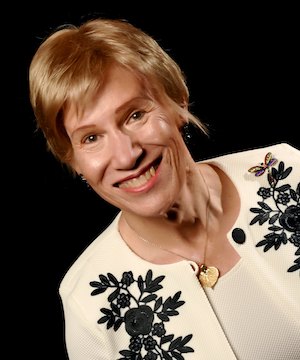
Trained hundreds of
nuclear power plant
operators and crossed
the North Pole
in a submarine.
My feminine presentation is a part of who I am.  I enjoy wearing skirts, simply cut draped tops and colorful wraps.  I love the feel of a nicely structured dress, and feeling a cooling breeze on my legs on a hot day.  I love the swish and snug warmth of a woolen maxi in midwinter.  I enjoy a little makeup to help define my best features, and occasionally a bit more for a fun evening out.  I am unapologetic about my choosing and enjoying these sensory experiences.

My feminine presentation does not totally define me. I have skills and talents I have developed that this patriarchal culture does not consider feminine, and that’s a little box I am delighted to kick my high heels through.

Are my femme practices merely reinforcing heteronormative gender stereotypes?  Well, what this culture demands is that I wear Dockers and polo shirts, dredging up tired old tropes of birth sex and karyotype.  I insist on being a woman, and my gender identity informs my gender presentation.  

So, am I then a stereotypical heteronormative woman?  Perhaps at first glance, first thought, but approach me, talk with me for a minute, and I will happily, thoughtlessly stand those stereotypes on their head.  Femme, yes.  But meeting the cultural standards for being girly or feminine?  Not so much.  That fine womanly subordination or weakness so encouraged by this culture seems to be missing in action!  

Madeleine Blum of the band “Unstraight” puts it: “The queer world is about breaking away from stereotypical gender roles. Anyone who is girly/feminine is not necessarily femme. Femme is an identity; feminine and girly are descriptors.”

I do hope that my femme practices make the patriarchal heteronormative gender police nervous.   Yes, gender police.  The folks who try to enforce cultural norms, telling me that I’m being myself incorrectly, making the laughable assumption that they know who my authentic self is better than I.  


"We live in a culture that celebrates masculinity and demonizes and shames femininity’s and those habits don't go away in the queer community."
 - Anna Bongiovanni

Holds nineteen patents and has
rebuilt a Triumph engine and
manual transmission.
Being queer and femme fails to meet cultural expectations, with the interesting result that folks tend to interpret my appearance as meaning that I am straight.  It doesn’t matter if these are straight, queer, or even queer femmes doing the interpretation. My appearance gets plugged straight into a cultural stereotype, and assumptions built on that stereotype are applied to me.

The cultural expectation is that a woman attracted to women will automatically reject gender roles, including appearance, as a part of rejecting the heterosexual role the culture assigns.   The cultural expectation is that women attracted to women will adopt a butch presentation, and men attracted to men will adopt a more feminine presentation.  Yes, that’s right, the cultural expectation is that we will continue to apply the broken gender binary model even when queer.

The cultural expectation is that we will sustain that gender binary in the roles we take, with those roles tightly bound to our sexuality.

I am not going to fulfill these cultural expectations.   I am going to do as I please.  I am a femme queer woman with a transgender history, attracted to other women who can take the time to forge that emotional connection with me.

Should you be prone to committing acts of assumption, know that your cultural stereotypes do not interest me, and if you make the mistake of assuming that I fit some stereotype, know that at some point I will happily, joyfully shock you.


I ran across the Tiffany Lee and Madeleine Blum quotes while researching another topic, and the ideas they stimulated caught fire with me, resulting in this little article.

Sunday, December 23, 2018

Perhaps it is time for a different approach

I read an article recently that has me thinking about the ways we label ourselves, and in so doing divide ourselves.  Perhaps it is time for a different approach.

We’ve all seen the strings of letters.  LGBT, LGBTQ, LGBTQQIA, LGBTQQIP2SAA, and so on.  The letters stand for a variety of terms that represent sexualities and genders.

  • L: Lesbian
  • G: Gay
  • B: Bisexual
  • T: Transgender, transsexual, and two-spirit
  • Q: Queer and questioning


There are additional terms that have come into use more recently:

  • QQ: Questioning and queer
  • I: Intersex
  • P: Pansexual
  • 2S: Two-spirit
  • A: Asexual
  • A: Ally (a person who is not LGBTQ but supports LGBTQ persons)


The list above is actually quite incomplete.  Kate Bornstein lists 200 sexualities and genders in “My New Gender Workbook”, and has found over 750 in use online.

The proliferation of identities is very useful for folks left out of the mainstream handful of identities in the acronyms.  However, trying to expand the acronym becomes unwieldy, and unfortunately signals the further partitioning of our little community into smaller and smaller factions. 

We are a small population of gender variant folks adrift on a life raft in a sea of heteronormative cisgender folks. Must we start sawing our raft into ever smaller pieces?

I’m not even sure which piece I should cling to, as an older woman, attracted to femme presentation, who got this way by being a transgender person.  Women  tell me I am not a “real woman”. Lesbians tell me I am not a lesbian. Transgender persons tell me I am not trans enough, or am a transsexual and not transgender. 

As we sift our communities members through ever smaller labeling screens some of us will fall through the gaps. 

I know who I am.  I am me, I am queer, and I am here. I support all of my Queer family, in the broadest sense, gay, lesbian, bi, trans, fluid, asexual, agender, two spirit, demi, aromantic, intersex, mux, or the hundreds of other variations of folks that don’t conform to cultural gender and sexual normative models. 

We are Q.


https://www.google.com/amp/s/www.theatlantic.com/amp/article/576388/ Jonathan Rauch, It’s Time to Drop the ‘LGBT’ From ‘LGBTQ’, Jan/Feb 2019, The Atlantic

Saturday, December 22, 2018

Divide and Conquer works, unfortunately

I am an older woman, attracted to femme presentation, who got this way by being a transgender person.  I have had some interesting things said to me recently.   Women  tell me I am not a “real woman”. Lesbians tell me I am not a lesbian. Transgender persons tell me I am not trans enough, or am a transsexual and not transgender. 

What is going on?  While there has always been some friction between the factions making up the “Q” community (LGBTQQIA2SM+, some 600 recognized identities) recently we have moved beyond friction to see a significant increase in folks who are outright exclusionary.  Perhaps there is a reason this is happening now, when at first glance, we should be standing united against forces hostile to all of us.

In October 2017  the Values Voter Summit, the annual political gathering sponsored by Family Values Council, a strongly anti-Q organization, featured a breakout session on “transgender ideology in public schools.” One panelist encouraged a “divide and conquer” strategy to defeat “totalitarian” school policies on transgender inclusion.

Meg Kilgannon, a panelist and director of Concerned Parents and Educators of Fairfax County, said:

“For all of its recent success, the LGBT alliance is actually fragile, and the trans activists need the gay rights movement to help legitimize them. Gender identity on its own is just a bridge too far. If you separate the T from the alphabet soup, we’ll have more success.”

She laid out a five point plan of attack to the conference:

  1. Engage: “Focus on gender identity to divide and conquer.”
  2. Educate: No personal attacks!  “If you attack trans people, you become the proof they rely on for demanding protection,” she said. “So don’t play into their victim narrative because in this culture war, they are the bullies, not the victims.”
  3. Explain: Use secular arguments to reach a more diverse audience rather than less effective religious arguments.
  4. Empowerment: Kilgannon said that the Hands Across the Aisle Coalition—which describes itself as a group of conservative and progressive women that rise above their differences “to oppose the transgender agenda”—includes feminists who argue that gender identity is the “ultimate misogyny” and “erasure of women.”  She said lesbians in the group are concerned that “transing masculine girls is a form of lesbian eugenics.”
  5. Elect: She urged activists to run for school board or to encourage other people from outside the “education-industrial complex” to run. She complained that school boards are full of ideological liberals.
The session speakers phrased their opposition to nondiscrimination policies in what sounded like progressive rhetoric, using phrases familiar to feminist moment speakers pushing for transgender exclusion.  Transgender rights were depicted as anti-feminist, or hostile to minorities.  They were framed as being disrespectful to LGB persons, pretenders and predators harmful to ‘the cause’.

This all sounds horribly familiar, and is unfortunately effective.


Tuesday, December 4, 2018

Shifts in Gender Orientation


I was recently interviewed for an article on unexpected shifts or discoveries in gender orientation for folks coming out after age 30.  I had a few thoughts on the topic that I expressed in the interview, and I thought I would get them in writing for our members.


I believe my shift in orientation, fundamentally becoming open to a larger range of partners, was due more to my recognizing and breaking down social taboos on orientation than any innate shift from hormone replacement therapy (HRT) or transition-related surgeries.

Our gender orientation, sexual and romantic, is built in layers.  There is a biological primitive, a bit of our brains wired to recognize other people as possible mates or competitors.  This sets the core of our sexual orientation.  We see others and this bit of our brain identifies those who might be possible mates or sexual partners, based on what can be perceived.  It tends to be a pretty broad sort of classification filter, and there are correlations such that it appears to be set in fetal development during the third trimester by the testosterone level the developing brain is exposed to.

In my case, the filter seems to favor femme appearance as a possible mate.

Our culture insists on certain behaviors as being acceptable.   Since this body was assigned male at birth, this culture had insisted that while growing up and presenting as male, that I only select persons with a strongly femme appearance as a potential mate.  That more or less matches my brain’s setting, so that was OK.  I accepted the cultural conditioning and assumed that was just how I was.

Ah, but then I came to accept my true nature, and violated cultural taboo by coming out and transitioning.  It turns out that breaking one taboo and surviving makes it easier to break other taboos.

Post-transition I, as a woman attracted to women, identified my orientation as a lesbian.  (Cis-lesbian readers, I understand how you may feel about this.  Just read on, please.  This is just my orientation, not culture!)

I was in a transgender person support group meeting, and sitting next to me was a man, with a lovely red-orange beard and reddish leg hair.  They were very kind and open, and I liked them.  In fact, I found myself fantasizing about them.  Now, where was THIS coming from?

After considerable introspection and discussion with some very good sexuality specialists, I realized that the people I am attracted to have not actually identified their genitalia to me, and that the women I did attractive are actually just a subset of persons with some strongly feminine aspects that I admire.  That is I am attracted to persons with some strongly femme attribute to their presentation, and not to some particular set of genitalia.

I rather flippantly describe my orientation now as lesbian with a 30% chance of queer.


This change was driven by my being more open to questioning cultural norms, and I beleive it was not affected by my HRT or surgery, beyond those resulting from my initially challenging and violating cultural norms.